
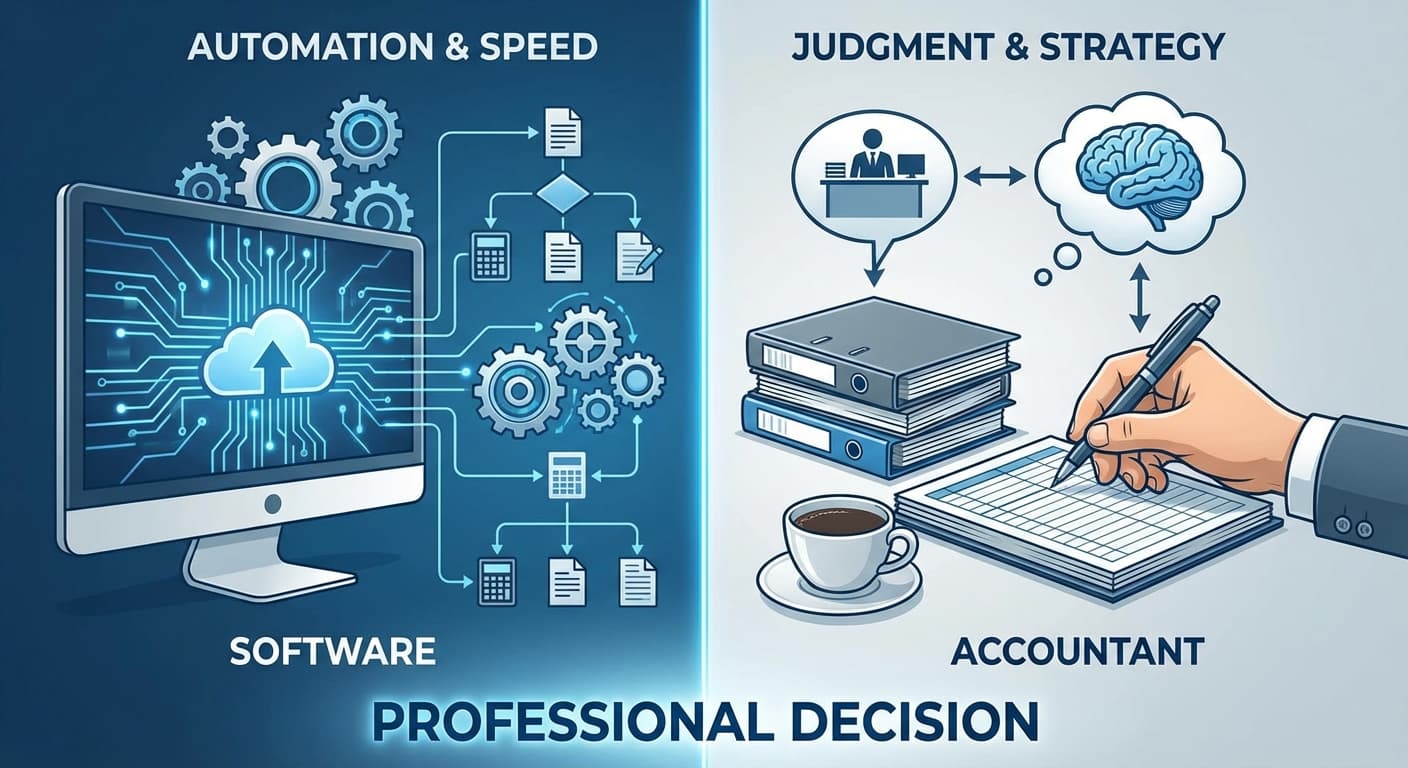
Tax Software vs Accountant: Which is Right for You?
Published on January 2026
Should you use tax software or hire an accountant? This decision affects not just your wallet but potentially your tax liability—choosing wrong could cost you thousands in missed deductions or expensive preparation fees.
The problem is that tax software promises "easy" and "free" filing while accountants offer expertise at premium prices. Without understanding when each option makes sense, you might overpay for software features you don't need or miss complex tax strategies that only professionals catch.
This guide compares tax software versus hiring an accountant with honest pros, cons, and costs for each option. You'll learn exactly which situations favor DIY software, when professional help pays for itself, and how to find the right solution for your specific tax complexity and budget.
When Tax Software Makes Sense
Tax software is ideal for straightforward tax situations. If you have W-2 income, take the standard deduction, and have no complex investments or business income, software can handle your return efficiently and affordably. Most software offers step-by-step guidance and error checking.
Modern tax software has become sophisticated, handling many complex situations including rental properties, self-employment income, investment sales, and even small business returns. Popular options like TurboTax, H&R Block, and TaxAct provide varying levels of support and complexity handling.
Cost is a major advantage—basic tax software starts free for simple returns, with more comprehensive versions ranging from $50-$200. Even the most expensive software packages cost less than an hour with a CPA. You also maintain complete control over the process and timing.
Advantages of Hiring an Accountant
Accountants bring expertise, experience, and peace of mind. A good CPA or enrolled agent knows tax law thoroughly and stays current with changes. They can provide strategic advice, catch potential problems, and find deductions you might miss.
Complex situations benefit most from professional help. If you own a business, have multiple income sources, made large investment transactions, experienced major life changes, or face an audit, an accountant's expertise is valuable. They can also represent you before the IRS if issues arise.
Accountants also provide year-round tax planning advice, not just return preparation. They can help you make strategic decisions about retirement contributions, business expenses, timing of income and deductions, and estimated tax payments.
Cost Comparison
Tax software typically costs $0-$200 depending on complexity. Free options exist for simple returns through IRS Free File. Premium versions with live support cost more but remain significantly cheaper than accountants.
Accountants charge based on complexity and their experience. Simple returns might cost $200-$500, while business returns or complex situations can run $500-$2,000 or more. CPAs in major cities charge higher rates than those in smaller markets. The peace of mind and potential tax savings often justify the cost.
Situations Where You Need an Accountant
Certain situations strongly favor professional help. If you own a business with employees, have international income or assets, face an audit or IRS notice, made large charitable donations of property, or have complex partnership interests, hire an accountant.
Major life events also warrant professional guidance—starting a business, getting divorced, inheriting significant assets, selling a business, or receiving a large windfall. The strategic advice you receive can save far more than the accountant's fee.
Hybrid Approach: Software Plus Professional Review
Many taxpayers use a hybrid approach—preparing their return with software then having an accountant review it. This costs less than full preparation but provides professional oversight. It's good for people comfortable with software who want verification of accuracy.
Another option is using software for simple years and hiring an accountant when complexity increases or for periodic strategic planning sessions. This balances cost savings with getting professional advice when you need it most.
Questions to Guide Your Decision
Ask yourself: How complex is my tax situation? Do I have time to prepare my own return? How comfortable am I with tax rules? Do I need strategic planning advice? What's my budget for tax preparation?
If your situation has changed significantly from previous years, consider consulting an accountant at least once to understand the implications. You can return to software in simpler years with better knowledge of your situation.
Finding the Right Professional
If you decide to hire an accountant, look for credentials like CPA (Certified Public Accountant) or EA (Enrolled Agent). Ask about their experience with situations like yours, their fee structure, and whether they provide year-round support or just return preparation.
Get recommendations from friends or colleagues with similar tax situations. Interview multiple candidates and choose someone who communicates well, understands your needs, and makes you feel comfortable discussing financial matters.
Conclusion
The choice between tax software and an accountant depends on your situation's complexity, your confidence with taxes, and your budget. Simple situations usually work fine with software, while complex situations benefit from professional expertise. Many taxpayers successfully use a mix of both approaches over time.
Start with our Tax Calculator to understand your tax situation, then decide which preparation method suits your needs.
Frequently Asked Questions
How much does tax software cost vs an accountant?
Tax software costs $0-$200 depending on complexity, with free options for simple returns. Accountants charge $200-$500 for simple returns and $500-$2,000+ for complex situations. Software is significantly cheaper but lacks personalized strategic advice.
Can tax software handle complex returns?
Yes, modern software handles rental properties, self-employment income, investment sales, and small business returns. However, software can't provide strategic tax planning advice, catch unusual situations, or represent you if audited—areas where accountants excel.
When should I hire an accountant instead of using software?
Hire an accountant if you own a business with employees, have international income, face an audit, made large property donations, experienced major life changes (divorce, inheritance, business sale), or have complex partnership interests. Professional expertise pays for itself in these situations.
What is a hybrid approach?
Many taxpayers prepare returns with software then have an accountant review them for accuracy. This costs less than full preparation but provides professional oversight. It's ideal for people comfortable with software who want verification before filing.
What credentials should I look for in an accountant?
Look for CPA (Certified Public Accountant) or EA (Enrolled Agent) credentials. CPAs pass rigorous exams and maintain continuing education. EAs specialize in tax and can represent you before the IRS. Both are qualified for complex tax situations, unlike unlicensed preparers.