
When Will You Get Your Tax Refund?
Published on January 2026
Where's my refund? If you're refreshing the IRS website daily and anxiously waiting for your money, you're not alone—millions of taxpayers experience the same frustration every tax season.
The problem is that refund timelines vary wildly depending on how you file, payment method, and potential red flags on your return. Without understanding these factors, you could be waiting weeks or months longer than necessary—or worrying unnecessarily about normal processing delays.
This guide explains exactly when you'll get your tax refund based on your filing method, how to track it accurately, what causes delays, and how to speed up the process. You'll know what to expect and when to take action if something's wrong.
Standard Refund Timeline
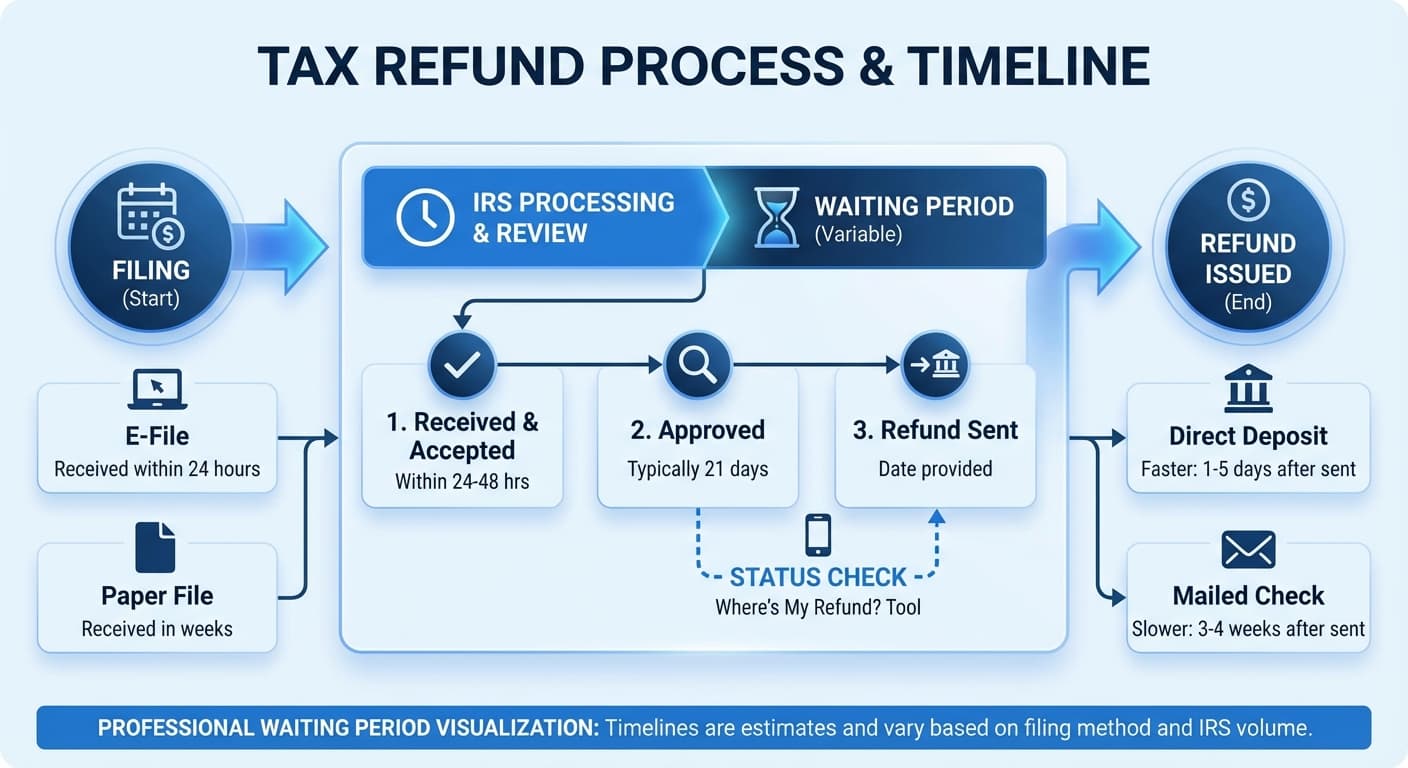
The IRS issues most refunds within 21 days of accepting your return when you e-file and choose direct deposit. This is the fastest option available. Paper returns take significantly longer—typically 6-8 weeks or more, especially during peak filing season from February through April.
The 21-day timeline starts when the IRS accepts your return, not when you file it. Acceptance usually occurs within 24-48 hours of e-filing. You'll receive confirmation from your tax software or preparer when the IRS accepts your return.
Direct deposit is fastest, with funds typically appearing 2-3 weeks after acceptance. Paper checks add another 5-7 days for mail delivery. If you owe past-due debts like student loans or child support, your refund may be offset, further delaying payment.
Tracking Your Refund Status
Use the IRS "Where's My Refund?" tool at IRS.gov or the IRS2Go mobile app to track your refund. You'll need your Social Security number, filing status, and exact refund amount. The tool updates once daily, usually overnight.
The tracker shows three stages: Return Received (the IRS received your return), Refund Approved (your return was processed and refund approved), and Refund Sent (payment was issued). Most people see the "Refund Sent" status within 21 days of acceptance.
Don't call the IRS unless the tool specifically instructs you to or it's been more than 21 days since e-filing with direct deposit or more than 6 weeks since mailing a paper return. Phone wait times can exceed an hour, and representatives can't provide information beyond what the online tool shows.
Factors That Delay Refunds
Claiming the Earned Income Tax Credit (EITC) or Additional Child Tax Credit (ACTC) delays refunds by law. The IRS cannot issue these refunds before mid-February to allow time for fraud prevention. If you claim these credits, expect your refund around early to mid-March at the earliest.
Errors on your return cause delays. Math mistakes, missing information, incorrect Social Security numbers, or mismatched names trigger manual review. The IRS may correct simple errors and process your return, but more complex issues require correspondence that adds weeks or months to processing.
Returns flagged for identity verification or suspected fraud face significant delays. If the IRS suspects identity theft, you'll need to verify your identity through forms or in-person appointments before receiving your refund. This process can take several months.
Amended returns take much longer—typically 8-12 weeks or more. The IRS processes amended returns in the order received, and during busy seasons, the backlog can extend processing time to several months.
How to Speed Up Your Refund
E-file your return rather than mailing paper. Electronic filing is faster, more accurate, and provides confirmation when the IRS receives and accepts your return. Most tax software and all professional preparers offer e-filing.
Choose direct deposit instead of paper check. Provide accurate bank account and routing numbers—one wrong digit means your refund bounces back to the IRS, delaying payment by weeks. Verify these numbers carefully against a check or bank statement.
File early in the season to avoid the February-April rush. Returns filed in January often process faster than those filed in April. However, wait until you've received all tax documents to avoid filing amended returns.
Double-check your return for accuracy before filing. Verify Social Security numbers, confirm math is correct, ensure names match Social Security cards exactly, and review all entries carefully. Accuracy prevents delays from error correction or correspondence.
What to Do If Your Refund Is Delayed
If more than 21 days have passed since e-filing or 6 weeks since mailing a paper return, check the "Where's My Refund?" tool first. If it says to call the IRS or shows no information after these timeframes, contact the IRS directly.
Have your return copy ready when calling. The IRS may ask questions about your return to verify your identity. If you used a paid preparer, contact them first—they may have information about the delay or be able to contact the IRS on your behalf.
If the IRS requests additional information or documentation, respond immediately. Delays in providing requested information extend your refund timeline significantly. Send requested documents via certified mail with return receipt to confirm delivery.
Refund Offsets and Garnishments
The Treasury Offset Program allows federal and state agencies to intercept your refund for past-due debts. Common offsets include unpaid federal taxes, state income taxes, federal student loans in default, child support arrears, and certain other debts owed to federal agencies.
You'll receive a notice explaining any offset, including the agency claiming the funds and contact information. If you disagree with an offset, contact the agency that requested it—the IRS only processes the offset but doesn't make the decision.
Planning Around Your Refund
Don't rely on receiving your refund by a specific date for paying bills or making major purchases. While most refunds arrive within three weeks, unexpected delays occur. Plan accordingly to avoid financial stress if your refund takes longer than expected.
Consider adjusting your withholding instead of receiving large refunds. A large refund means you gave the government an interest-free loan throughout the year. Adjusting your W-4 to have less withheld puts more money in each paycheck for savings or investment.
Conclusion
Most taxpayers who e-file and choose direct deposit receive refunds within 21 days. Filing accurately, choosing electronic options, and tracking your refund status helps ensure the fastest processing. If delays occur, use the IRS tracking tools and contact the IRS only if instructed or after the standard processing time has passed.
Estimate your refund with our Tax Calculator to know what to expect this tax season.
Frequently Asked Questions
How long does it take to get a tax refund?
Most refunds arrive within 21 days if you e-file and choose direct deposit. Paper returns take 6-8 weeks or longer. The 21-day countdown starts when the IRS accepts your return, not when you file it. Direct deposit is 5-7 days faster than paper checks.
Why is my refund taking longer than 21 days?
Common delays include claiming EITC or ACTC (refunds held until mid-February by law), errors on your return requiring manual review, identity verification requirements, suspected fraud flags, or amended returns (8-12 weeks minimum). Check "Where's My Refund?" for your specific status.
Can I track my refund?
Yes, use the IRS "Where's My Refund?" tool at IRS.gov or the IRS2Go mobile app. You'll need your SSN, filing status, and exact refund amount. The tool updates once daily and shows three stages: Return Received, Refund Approved, and Refund Sent.
What if my refund was offset for debts?
The Treasury Offset Program intercepts refunds for past-due federal taxes, state taxes, federal student loans, child support, and certain other debts. You'll receive a notice explaining the offset, the amount taken, and which agency claimed the funds. Contact that agency to dispute offsets.
How do I speed up my refund?
E-file your return (don't mail), choose direct deposit (not paper check), file early in tax season, double-check all information for accuracy, verify bank account numbers are correct, and wait until you have all tax documents before filing to avoid amended returns.