
Tax-Advantaged Investment Accounts 2026
Published on March 2026
Investing $10,000 in a taxable account versus a Roth IRA can mean a $40,000 difference after 30 years—all because of taxes eating into your returns year after year.
The problem is that most investors focus on investment selection while ignoring account type. Even with perfect stock picks, holding them in the wrong account costs you 20-30% of lifetime returns through unnecessary taxes. Between 401(k)s, IRAs, Roth accounts, HSAs, and taxable brokerage, where should your money go first?
This guide breaks down every tax-advantaged investment account available in 2026—contribution limits, withdrawal rules, and optimal contribution strategies. You'll learn exactly which accounts to prioritize and how to legally minimize taxes on your investments for decades.
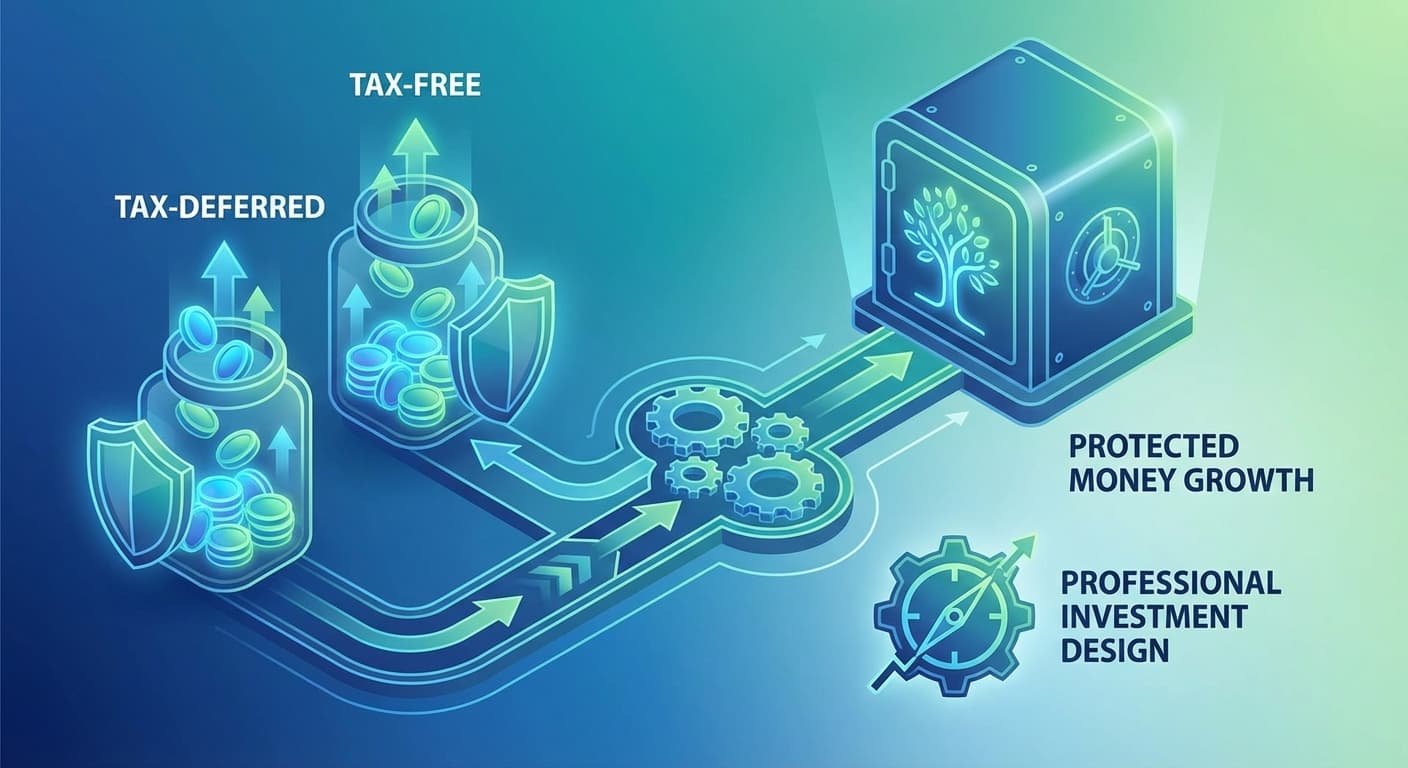
Tax-advantaged investment accounts provide legal methods to reduce current taxes, grow investments tax-free, or both. Understanding contribution limits, withdrawal rules, and strategic allocation maximizes long-term wealth accumulation.
401(k) Plans
Contribute up to $23,000 ($30,500 if 50+) pre-tax, reducing current taxable income. Employer matches are free money. Choose Roth 401(k) for tax-free withdrawals in retirement at the cost of no current deduction.
Traditional vs Roth IRAs
Traditional IRAs offer current deductions with taxed withdrawals. Roth IRAs provide no current deduction but tax-free retirement withdrawals. Choose based on current versus expected future tax rates.
Health Savings Accounts
Triple tax advantage: deductible contributions, tax-free growth, tax-free withdrawals for medical expenses. Contribute $4,150 (individual) or $8,300 (family) in 2026. HSAs beat all other account types for medical savings.
SEP-IRAs and Solo 401(k)s
Self-employed individuals access larger contribution limits. SEP-IRAs allow up to 25% of net self-employment income. Solo 401(k)s combine employee deferrals plus employer contributions for maximum savings.
Strategic Contribution Order
First, max employer 401(k) match. Then max HSA. Then max Roth IRA or Traditional IRA. Finally, max remaining 401(k) space. This order optimizes tax benefits and flexibility.
Frequently Asked Questions
Q: Should I contribute to Traditional or Roth accounts?
A: Choose Traditional (401k/IRA) if you're in a high tax bracket now and expect lower taxes in retirement. Choose Roth if you're early in your career, in a low bracket, or expect higher future taxes. Consider hedging by contributing to both.
Q: What's the maximum I can contribute to retirement accounts?
A: For 2026: $23,000 to 401(k) ($30,500 if 50+), $7,000 to IRA ($8,000 if 50+), $4,150 to HSA individual ($8,300 family). Self-employed? SEP-IRA allows up to 25% of net earnings, Solo 401(k) up to $69,000 total.
Q: Can I contribute to both a 401(k) and IRA?
A: Yes! They have separate contribution limits. However, IRA deductibility phases out at higher incomes if you're covered by a workplace plan: $77,000-$87,000 (single) or $123,000-$143,000 (married) in 2026. Roth IRA phases out at higher thresholds.
Q: What's a backdoor Roth IRA?
A: High earners above Roth IRA income limits can contribute to a Traditional IRA (non-deductible) and immediately convert to Roth. This "backdoor" provides Roth access regardless of income. Watch for pro-rata rules if you have other Traditional IRA balances.
Q: Should I prioritize HSA or retirement accounts?
A: Max employer 401(k) match first, then HSA if eligible (triple tax advantage beats everything). Then Roth IRA, then remaining 401(k). HSA is technically the best account—tax-deductible contributions, tax-free growth, and tax-free medical withdrawals.
Q: When can I withdraw from retirement accounts without penalties?
A: Generally age 59½ for IRAs and 401(k)s. Roth IRA contributions (not earnings) can be withdrawn anytime penalty-free. HSA withdrawals for qualified medical expenses are always tax and penalty-free at any age. Earlier withdrawals typically face 10% penalty plus income tax.
Conclusion
Strategic use of tax-advantaged accounts accelerates wealth accumulation through tax savings. Max employer matches first, prioritize accounts based on current versus future tax rates, and leverage HSAs for medical expenses to optimize lifetime tax efficiency.
The earlier you start maximizing these accounts, the more dramatic the compounding benefits. Even $500/month in the right tax-advantaged accounts can build to $1M+ over 30 years.
Use our Retirement Tax Calculator to compare Traditional vs Roth strategies and optimize your contribution plan for 2026.