
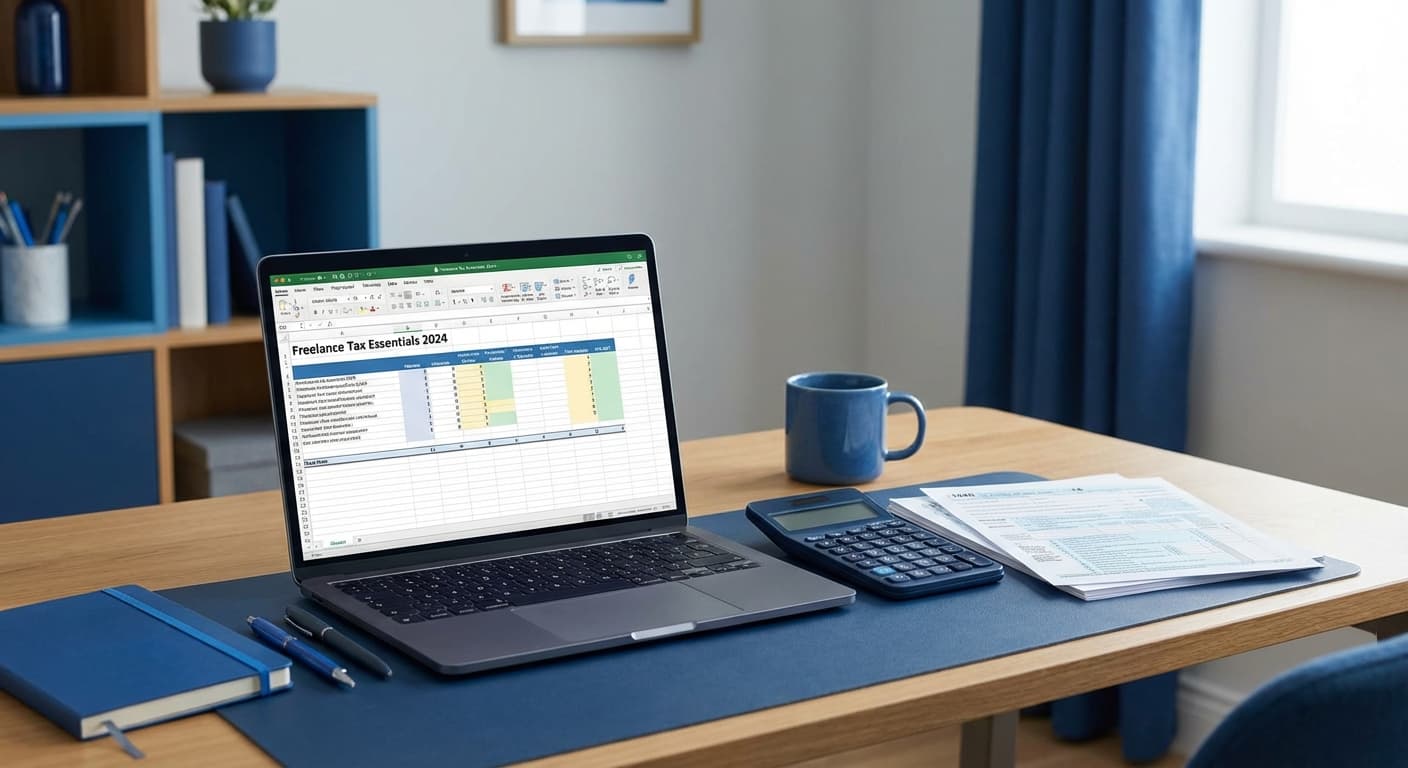
Freelancer Tax Essentials: What You Must Know
Published on January 2026
Your first freelance paycheck feels amazing—until tax season hits. Then you discover you owe thousands in taxes you never set aside, plus penalties for missing quarterly payments you didn't know existed.
The problem? Freelancers pay 15.3% self-employment tax on top of income tax, must make quarterly estimated payments (or face penalties), and miss out on valuable deductions because they don't track expenses. The average new freelancer overpays by $3,000-$5,000 annually—or worse, gets hit with underpayment penalties.
This guide teaches you the tax essentials every freelancer must know. We cover 1099 forms, self-employment tax calculations, quarterly payment schedules, the top deductions that reduce your tax bill by thousands, and record-keeping systems that make tax time painless instead of panic-inducing.
Freelancing offers flexibility and independence, but it also means you're responsible for managing your own taxes. Unlike traditional employment where taxes are withheld automatically, freelancers must track income, calculate taxes, make quarterly payments, and maximize deductions. This guide covers everything freelancers need to know about taxes.
Understanding 1099 Forms
Clients who pay you $600 or more in a year must send you Form 1099-NEC by January 31. This form reports your income to both you and the IRS. However, you must report all freelance income, even if you don't receive a 1099 or earned less than $600 from a single client.
Keep your own income records throughout the year rather than relying solely on 1099 forms. Some clients miss the deadline or send incorrect information. Having your own records ensures accurate reporting and helps you catch discrepancies early.
Self-Employment Tax Essentials
Freelancers pay self-employment tax of 15.3% on net earnings—12.4% for Social Security (on earnings up to $168,600 in 2026) and 2.9% for Medicare (on all earnings). This is in addition to regular income tax and covers both the employee and employer portions of these taxes.
The good news is you can deduct half of your self-employment tax when calculating adjusted gross income. This deduction partially offsets the additional tax burden. High earners also pay an additional 0.9% Medicare tax on income above certain thresholds.
Making Quarterly Estimated Payments
If you expect to owe $1,000 or more in taxes, you must make quarterly estimated payments. The due dates are April 15, June 15, September 15, and January 15. Missing these deadlines results in underpayment penalties and interest.
Calculate quarterly payments using Form 1040-ES. A safe approach is paying 100% of last year's tax liability divided by four (110% if your income exceeded $150,000). Alternatively, calculate each quarter based on actual income, which works well if your earnings fluctuate.
Set aside 25-30% of each payment you receive in a dedicated tax savings account. This ensures you'll have funds available when quarterly payments are due and prevents cash flow problems at tax time.
Essential Freelancer Deductions
Deductions reduce your taxable income, potentially saving thousands in taxes. Common freelancer deductions include home office expenses, computer and equipment, software and subscriptions, internet and phone service (business portion), professional development and courses, business insurance, advertising and marketing, and supplies and materials.
The home office deduction is particularly valuable. If you use a dedicated space exclusively for business, you can deduct related expenses or use the simplified method of $5 per square foot (up to 300 square feet). Track your actual expenses to determine which method provides the larger deduction.
Business mileage is deductible at 67 cents per mile in 2026. Maintain a mileage log recording date, destination, business purpose, and miles driven. This adds up quickly for freelancers who meet clients or travel for work.
Record-Keeping Best Practices
Good record-keeping is essential for claiming deductions and handling potential audits. Keep all receipts for business expenses, track mileage for business driving, maintain invoices and payment records for all client work, and save bank and credit card statements showing business transactions.
Use separate bank accounts and credit cards for business to clearly distinguish business from personal expenses. Accounting software like QuickBooks Self-Employed, FreshBooks, or Wave automates much of the tracking and generates reports for tax time.
Digital organization tools and receipt-scanning apps let you capture expenses in real-time. Photograph receipts immediately and categorize them—it's much easier than sorting through a shoebox of receipts in April.
Retirement Savings for Freelancers
Freelancers have access to powerful retirement savings options. SEP-IRAs allow contributions up to 25% of net self-employment income, with a maximum of $69,000 in 2026. Contributions are tax-deductible and grow tax-deferred.
Solo 401(k)s offer even more flexibility. You can contribute as both employee (up to $23,000 plus $7,500 catch-up if over 50) and employer (up to 25% of net income), reaching a combined limit of $69,000 ($76,500 with catch-up). These contributions reduce your current tax liability while building retirement security.
Health Insurance Deduction
Self-employed individuals can deduct health insurance premiums paid for themselves, their spouse, and dependents. This is an above-the-line deduction, meaning you can claim it even if you take the standard deduction. It reduces both income and self-employment tax.
If you're eligible for employer-sponsored coverage through a spouse's plan or a part-time job, you generally cannot take this deduction for months when that coverage was available. Keep documentation of premium payments throughout the year.
Year-End Tax Planning
As the year ends, review your income and expenses to optimize your tax situation. If you had a profitable year, consider accelerating deductible expenses into the current year—purchase needed equipment, prepay some expenses, or increase retirement contributions.
If income was lower than expected, you might delay collections until January to spread income over two years. However, be careful with cash flow and don't sacrifice business needs for minor tax benefits.
Frequently Asked Questions
Do freelancers pay more taxes than employees?
Yes, freelancers pay self-employment tax of 15.3% (Social Security + Medicare) in addition to regular income tax, covering both employee and employer portions. However, you can deduct business expenses, half of self-employment tax, health insurance premiums, and contribute more to retirement accounts, which can significantly reduce your tax burden.
How much should freelancers set aside for taxes?
Set aside 25-30% of each payment received for taxes. This covers federal income tax, state income tax (if applicable), and 15.3% self-employment tax. High earners should save 30-35%. Open a dedicated tax savings account and transfer a percentage of every payment immediately to avoid cash flow problems at tax time.
When are quarterly estimated tax payments due?
Quarterly estimated tax deadlines are April 15 (Q1), June 15 (Q2), September 15 (Q3), and January 15 (Q4 of the following year). If you expect to owe $1,000 or more in taxes, you must make quarterly payments or face underpayment penalties. Use Form 1040-ES to calculate payments.
What freelancer expenses are tax deductible?
Common deductions include home office expenses (dedicated space), computer and equipment, software subscriptions, internet and phone (business portion), professional development, business insurance, advertising and marketing, supplies, business mileage (67¢/mile in 2026), and health insurance premiums. Keep receipts and documentation for all deductions.
What is a 1099-NEC form and when do I receive it?
Form 1099-NEC reports non-employee compensation (freelance income). Clients who paid you $600 or more must send you a 1099-NEC by January 31. However, you must report ALL freelance income on your tax return, even if you didn't receive a 1099 or earned less than $600 from a client.
Can freelancers deduct home office expenses?
Yes, if you use a dedicated space exclusively and regularly for business. Choose between the simplified method ($5 per square foot, up to 300 sq ft) or actual expense method (calculate percentage of home used for business and deduct that percentage of rent, utilities, insurance, etc.). The actual expense method usually provides larger deductions but requires more record-keeping.
What retirement accounts are available for freelancers?
SEP-IRA allows contributions up to 25% of net self-employment income (max $69,000 in 2026). Solo 401(k) allows employee contributions ($23,000 + $7,500 catch-up if 50+) plus employer contributions (25% of net income), reaching $69,000 total ($76,500 with catch-up). Both reduce taxable income and grow tax-deferred.
Do I need separate bank accounts for freelance work?
Highly recommended. Separate business bank accounts and credit cards make tracking income and expenses dramatically easier, provide clear audit trails, simplify bookkeeping, and demonstrate to the IRS that you're running a legitimate business. This separation is especially important if you form an LLC or S-Corp.
Conclusion
Managing freelance taxes requires organization, planning, and understanding your obligations. By tracking income and expenses diligently, making timely quarterly payments, maximizing deductions, and contributing to retirement accounts, you can minimize your tax burden and keep more of your hard-earned income.
Use our Tax Estimator to calculate your quarterly payments and plan your freelance tax strategy.