
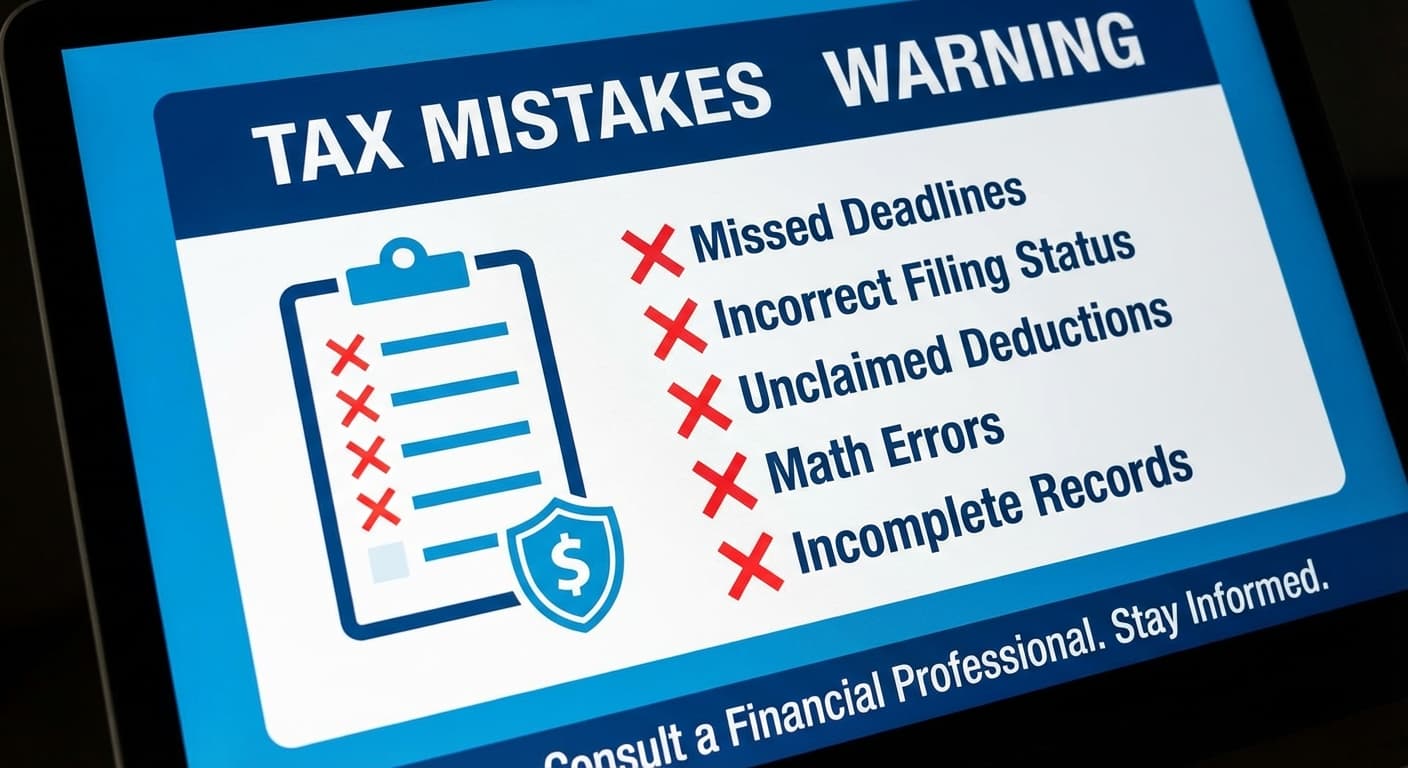
10 Common Tax Mistakes to Avoid
Published on January 2026
Paid $3,200 more in taxes than necessary because you missed a deduction? Filed too early and had to amend, delaying your refund by four months? You're among the 40% of taxpayers who make preventable mistakes that cost money, time, and unnecessary IRS attention.
The problem is that tax rules are complex and constantly changing. Simple errors—wrong Social Security numbers, miscalculated income, forgotten deductions—trigger delays, audits, or forfeited refunds. Many taxpayers rush through filing without checking their work, file before receiving all documents, or simply don't know which deductions they qualify for.
This comprehensive guide reveals the 10 most common tax mistakes and exactly how to avoid them. You'll learn which errors delay refunds versus trigger audits, how to verify information before filing, deductions most people miss, record-keeping best practices, and when to seek professional help. Follow these guidelines to file accurately, maximize refunds, and avoid costly errors.
Tax mistakes can cost you money in missed refunds, penalties, or triggering an audit. Many errors are easily preventable with proper attention and understanding. Avoiding these common mistakes will help you file accurate returns and maximize your tax savings.
1. Math Errors and Data Entry Mistakes
Simple calculation errors are the most common tax mistakes. Whether you're doing taxes by hand or using software, always double-check your numbers. Transposed digits, missed decimals, or addition errors can delay your refund or result in owing more than expected.
Tax software greatly reduces this risk by automating calculations. If filing manually, use a calculator and verify all numbers multiple times. Have a second person review your return before filing.
2. Missing or Incorrect Social Security Numbers
Every person claimed on your return must have a correct Social Security number or tax identification number. A single wrong digit will delay processing and may result in rejected refunds or denied credits. This is especially important for dependents and the Child Tax Credit.
Verify SSNs against Social Security cards before filing. If you've gotten married and changed your name, ensure your name with the IRS matches the name on your Social Security card.
3. Choosing the Wrong Filing Status
Your filing status significantly impacts your tax bill. Common mistakes include married couples filing separately when jointly would save money, or qualifying widows/widowers not using their special status. Head of household status has specific requirements that many people misunderstand.
Calculate your taxes using different filing statuses to see which provides the best outcome. If you're separated but not divorced, you may qualify as unmarried for tax purposes if you meet certain requirements.
4. Missing Income
The IRS receives copies of all W-2s, 1099s, and other income reports. Failing to report all income is a red flag for audits. Common missed income includes freelance work, investment income, unemployment benefits, rental income, and cryptocurrency transactions.
Wait until you've received all tax documents before filing. Check your records for any income that might not have generated a form, such as cash payments over $600 or prize winnings. All income is taxable unless specifically excluded by law.
5. Overlooking Valuable Deductions and Credits
Many taxpayers miss deductions and credits they're entitled to claim. Commonly overlooked items include state sales tax (as an alternative to state income tax), student loan interest, educator expenses, retirement savings contributions credit, and energy-efficient home improvement credits.
Review a comprehensive tax deduction checklist each year. Keep good records of potential deductions throughout the year rather than trying to remember everything at tax time. Consider using professional help if your situation is complex.
6. Not Contributing to Retirement Accounts
Failing to maximize retirement contributions means leaving tax savings on the table. You have until the tax filing deadline to contribute to IRAs for the previous year. Many people miss this opportunity to reduce their tax bill and boost retirement savings simultaneously.
Before filing, calculate whether making additional IRA contributions would benefit you. If you're self-employed, consider SEP-IRA contributions, which have much higher limits and can substantially reduce your taxes.
7. Forgetting to Sign the Return
An unsigned return is not valid. If filing electronically, both spouses must sign using their PIN or signature. Paper returns require actual signatures. This simple oversight delays processing and refunds.
E-filing with a PIN creates an electronic signature that's secure and convenient. If filing by mail, sign in ink before mailing and keep a copy of the signed return for your records.
8. Incorrect Bank Account Information
If you're receiving a refund via direct deposit, verify your bank account and routing numbers carefully. One wrong digit means your refund goes to the wrong account or bounces back to the IRS, delaying payment by weeks or months.
Look at a check or bank statement to confirm routing and account numbers. Some banks have different routing numbers for different purposes—use the one for direct deposits, not wire transfers.
9. Filing Too Early Without All Documents
Filing before you've received all tax documents can lead to amended returns. Wait for all W-2s, 1099s, and K-1s before filing. Employers and financial institutions must send tax documents by January 31, but K-1s from partnerships or S-corporations often arrive much later.
If you haven't received expected forms by mid-February, contact the issuer. Filing an amended return is possible but adds complexity and delays final processing.
10. Not Keeping Proper Records
Poor record-keeping makes filing difficult and leaves you vulnerable if audited. Keep tax returns and supporting documents for at least three years, longer for certain situations. Save receipts for deductible expenses, especially charitable donations and business expenses.
Create a tax file throughout the year where you collect receipts, statements, and documents. Digital scanning and organization apps can make this easier. Good records also help you plan for next year's taxes.
Frequently Asked Questions
Q: What is the most common tax mistake?
Math and calculation errors are the most frequent mistakes, affecting millions of returns. Other top mistakes include incorrect Social Security numbers, wrong filing status, missing income reports, and overlooking deductions and credits. Using tax software eliminates most calculation errors.
Q: How can I avoid tax mistakes?
Use tax software or e-filing to eliminate math errors. Wait for all tax documents before filing. Verify Social Security numbers against cards. Keep organized records throughout the year. Review deduction checklists. Double-check bank information for direct deposit. Have someone review your return before submitting.
Q: What happens if I make a mistake on my tax return?
The IRS automatically corrects simple math errors and sends you a notice. For other errors, you may need to file an amended return using Form 1040-X. Mistakes can delay refunds by weeks or months. Significant errors may trigger audits or penalties if they result in underpayment.
Q: Should I file my taxes early or wait?
Wait until you've received all tax documents (W-2s, 1099s, K-1s) before filing. Early filing without complete information leads to amended returns. Most forms arrive by January 31, but K-1s from partnerships often come in March. Filing complete returns the first time is better than filing early and amending.
Q: Can I fix a tax mistake after filing?
Yes, file an amended return using Form 1040-X if you need to correct errors, add missed income, or claim forgotten deductions. You have three years from the original filing date to amend. The IRS automatically corrects simple math errors without requiring amendments.
Q: What tax deductions do people commonly miss?
Commonly missed deductions include student loan interest, educator expenses, state sales tax (alternative to income tax), charitable mileage, job search expenses (if self-employed), home office deduction, retirement saver's credit, and energy-efficient home improvement credits. Keep records throughout the year to claim all eligible deductions.
Q: How long should I keep tax records?
Keep tax returns and supporting documents for at least three years from the filing date. Keep records for six years if you underreported income by 25% or more. Keep records indefinitely for unfiled returns or fraudulent returns. Save receipts for property, stocks, and retirement accounts until you sell them, plus seven years after.
Q: When should I hire a tax professional?
Consider professional help if you're self-employed, have investment properties, experienced major life changes (marriage, divorce, inheritance), have foreign income or accounts, face an audit, or have complex situations with multiple income sources. The cost often pays for itself in tax savings and peace of mind.
Conclusion
Avoiding these common tax mistakes requires attention to detail, good record-keeping, and understanding of tax rules. Take your time when preparing your return, double-check all information, and don't hesitate to seek professional help for complex situations. A little extra care can save significant money and stress.
Use our Tax Calculator to verify your calculations and ensure accuracy.