
Common Tax Filing Errors to Avoid
Published on February 2026
Filed your tax return three months ago and still waiting for your $4,500 refund? You're likely one of the 20 million taxpayers whose returns get flagged annually for simple errors—mistakes that delay refunds by 6-12 weeks or trigger audits.
The problem is that small filing errors have big consequences. A transposed Social Security number, missing signature, wrong bank account, or forgotten schedule can freeze your entire return. The IRS processes 150+ million returns annually, and yours won't get special treatment—errors mean automatic delays, manual reviews, and in worst cases, penalties or audits.
This guide reveals the 10 most common tax filing errors and exactly how to avoid them. You'll learn which mistakes delay refunds versus trigger audits, how the IRS catches errors, automatic correction procedures, and the single best way to eliminate 99% of filing mistakes. Follow these guidelines to get your refund faster and avoid IRS headaches.
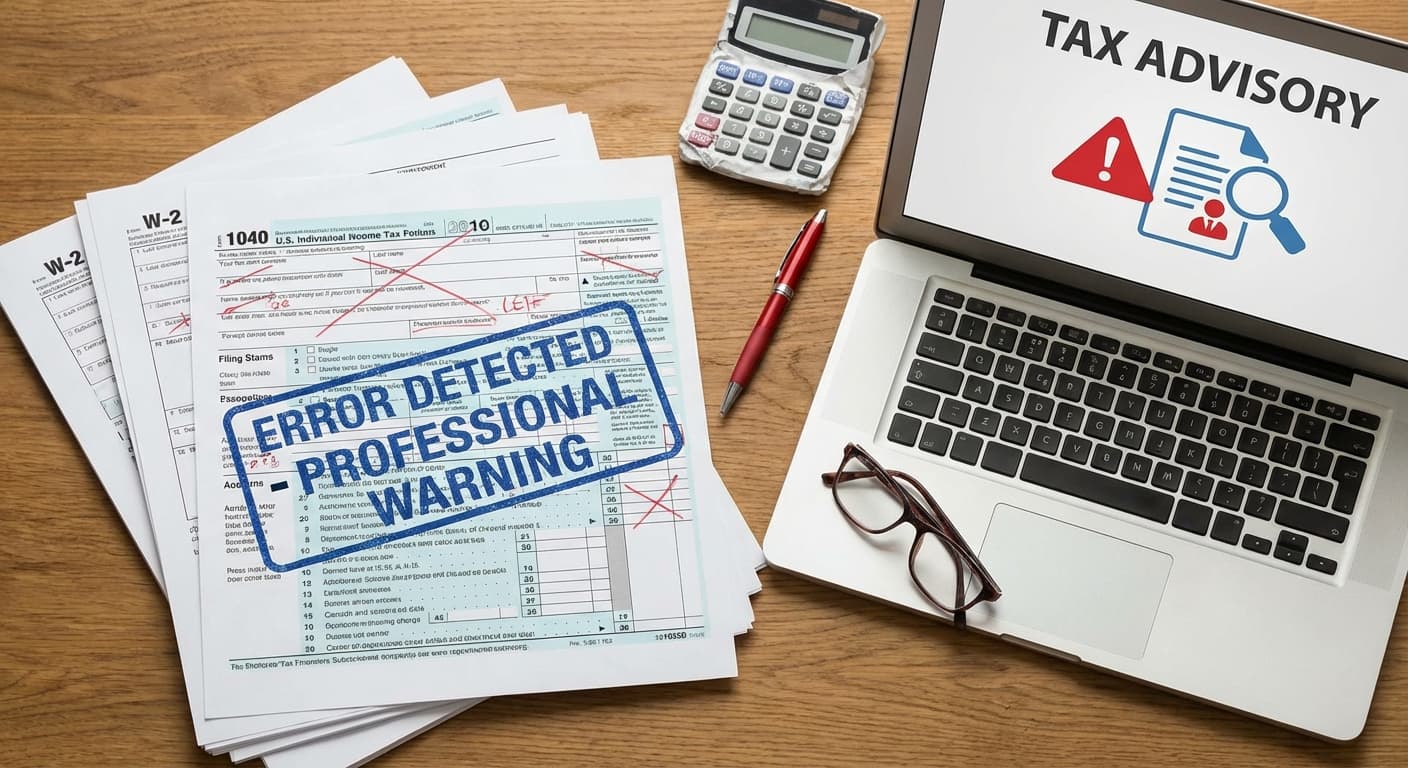
Simple filing errors delay refunds and increase audit risk. Understanding the most common mistakes—math errors, incorrect Social Security numbers, and missing schedules—ensures smooth processing and faster refunds.
Math and Calculation Errors
Arithmetic mistakes are the most common filing error. Tax software eliminates math errors, making e-filing far more accurate than paper returns. Double-check all manually entered numbers.
Wrong or Missing SSNs
Incorrect Social Security numbers for taxpayers, spouses, or dependents delay processing. Verify SSNs match Social Security cards exactly, including name spellings and numbers.
Filing Status Mistakes
Choosing wrong filing status affects tax rates and deduction amounts. Marital status on December 31 determines filing status for the entire year. Head of Household has specific dependency requirements.
Unsigned Returns
Unsigned tax returns are invalid. Both spouses must sign joint returns. E-filed returns require PIN signatures. Missing signatures delay processing by months.
Bank Account Errors
Wrong account or routing numbers for direct deposit delay refunds. Closed accounts prevent deposits, triggering mailed paper checks adding weeks to refund time. Verify bank information carefully.
Forgetting to Attach Schedules
Missing Schedule C, D, or E when required creates incomplete returns. E-filing software prevents this but paper filers must double-check all required schedules attach before mailing.
Frequently Asked Questions
Q: What is the most common tax filing error?
Math and calculation errors are the most common, affecting millions of returns annually. Using tax software or e-filing eliminates virtually all math mistakes. Other frequent errors include incorrect Social Security numbers, wrong filing status, missing signatures, and bank account errors for direct deposit.
Q: Will the IRS correct math errors automatically?
Yes, the IRS automatically corrects simple math errors and sends you a notice explaining the correction. However, this delays processing by several weeks. If the error results in you owing more tax, you'll receive a bill. If you overpaid, you'll get a larger refund. E-filing prevents math errors entirely.
Q: What happens if I enter the wrong Social Security number?
Incorrect SSNs for you, your spouse, or dependents will delay your return and may result in rejection. The IRS matches names and SSNs against Social Security Administration records. If they don't match, your return is flagged for manual review, delaying refunds by months. Always verify SSNs match Social Security cards exactly.
Q: Can I file without signing my tax return?
No, unsigned returns are considered invalid and won't be processed. Paper returns require handwritten signatures. E-filed returns require electronic PIN signatures. For joint returns, both spouses must sign. Missing a signature can delay your return by months until you submit a corrected version.
Q: What if my direct deposit information is wrong?
Wrong account or routing numbers will cause your refund to be rejected by the bank and converted to a mailed paper check, adding 3-4 weeks to delivery. If the account is closed or belongs to someone else, the bank will return the funds to the IRS, which will then mail a check. Always triple-check your bank information before filing.
Q: How do I know which filing status to choose?
Your marital status on December 31 determines your filing status for the entire year. Married couples can file jointly or separately. Single taxpayers can file as single or head of household (if they have qualifying dependents and pay over half household costs). Choosing the wrong status can cost thousands in lost deductions and credits.
Q: What happens if I forget to attach a required schedule?
Missing required schedules (Schedule C for business income, Schedule D for capital gains, Schedule E for rental income) make your return incomplete. The IRS will send a notice requesting the missing information, delaying processing significantly. E-filing software automatically includes required schedules based on your entries.
Q: How can I avoid tax filing errors?
Use tax software or e-filing to eliminate math errors and ensure all required forms are included. Verify all SSNs match Social Security cards. Double-check bank account and routing numbers. Review your entire return before submitting. Consider using Direct File or Free File if you qualify, or hire a professional for complex returns.
Conclusion
Avoiding common filing errors accelerates refund processing and reduces audit risk. E-filing eliminates math mistakes, verify all SSNs carefully, double-check bank information, and ensure all required schedules attach before submission.
Use our Tax Calculator to estimate your tax liability and optimize your tax strategy for 2026.